
If you have cut back on food, started exercising more, and the scale still will not move, testosterone could be part of the story. It is not an excuse, and it is not the whole picture either, but for a lot of men over 40, it is the missing piece nobody mentioned. At Weight Loss For Men Thailand, we see this pattern constantly in men who arrive at our camp in Chiang Mai frustrated that “eating less and moving more” stopped working the way it used to.
So can low testosterone cause weight gain? Yes, it can. Low testosterone can be one factor that makes weight management harder. It is associated with changes in body composition, including lower lean mass and more fat mass, as well as symptoms such as low energy that can make regular activity harder to maintain. Here is what is actually happening, and what to do about it.
What Testosterone Does for Your Weight
Testosterone is not just about libido or muscle size. It plays a direct role in how your body manages energy.
Higher testosterone levels help you build and hold onto lean muscle mass, and muscle burns more calories at rest than fat does. Testosterone also affects how your body responds to insulin, and it influences where you store fat, with a strong tendency to push it toward the abdomen when levels drop. So when testosterone declines, three things tend to happen at once: your resting metabolism slows down, your body becomes more efficient at storing fat, and your motivation and energy for training take a hit too.
None of this happens overnight. Testosterone levels can change with body weight, sleep, chronic health conditions, medication use, and age. The wider changes that make weight loss for men over 40 and 50 feel different, including lower activity, poorer sleep, and gradual shifts in body composition, can overlap with lower testosterone. For some men, that overlap becomes more noticeable in midlife. It does not mean age alone explains weight gain, but it can change the baseline from which weight loss has to begin.
Does Low Testosterone Cause Weight Gain?
Low testosterone can make weight management more difficult, but it is rarely the only reason a man gains weight. It is associated with changes in body composition, including lower lean muscle mass and higher fat mass. It can also overlap with low energy and fatigue, which may make regular activity harder to maintain.
Muscle mass affects how much energy the body uses, but the picture is not as simple as testosterone alone causing weight gain. Sleep, diet, activity levels, stress, medication use and existing health conditions can all affect weight at the same time. Higher body fat can also be linked with lower testosterone, so the relationship can work in both directions.
Will low testosterone cause weight gain in every man? No. Low testosterone weight gain, when it happens, often develops gradually rather than overnight. Weight gain alone does not confirm low testosterone, so men with ongoing symptoms should speak with a qualified clinician about whether testing is appropriate.
Does Low Testosterone Cause Belly Fat Specifically?
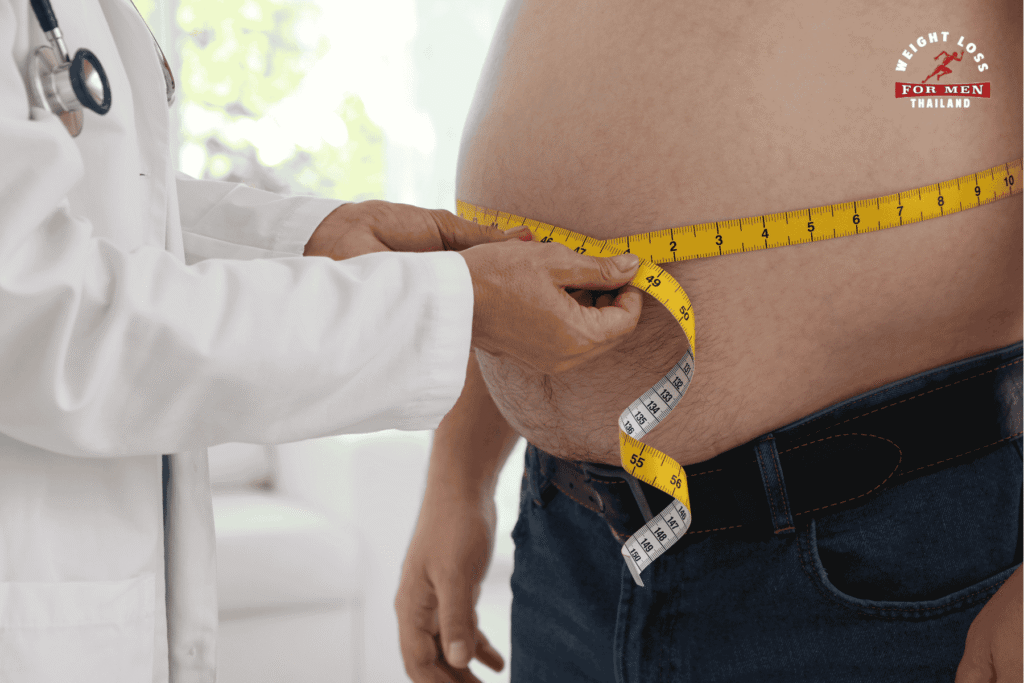
This is one of the most common questions we get, and there is a good reason for it. Low testosterone does not just cause general weight gain, it tends to concentrate fat around the abdomen more than other areas of the body.
Visceral fat, the kind that sits around your organs rather than just under the skin, is particularly linked to lower testosterone levels. Belly fat and low testosterone can end up feeding each other. Excess visceral fat produces an enzyme that converts testosterone into estrogen, which can lower your testosterone further, and then makes it easier to gain more fat in that same area. This is one reason a man can be doing everything he thinks is right and still watch his waistline grow while the rest of his body barely changes.
Signs of Low Testosterone in Men Over 40
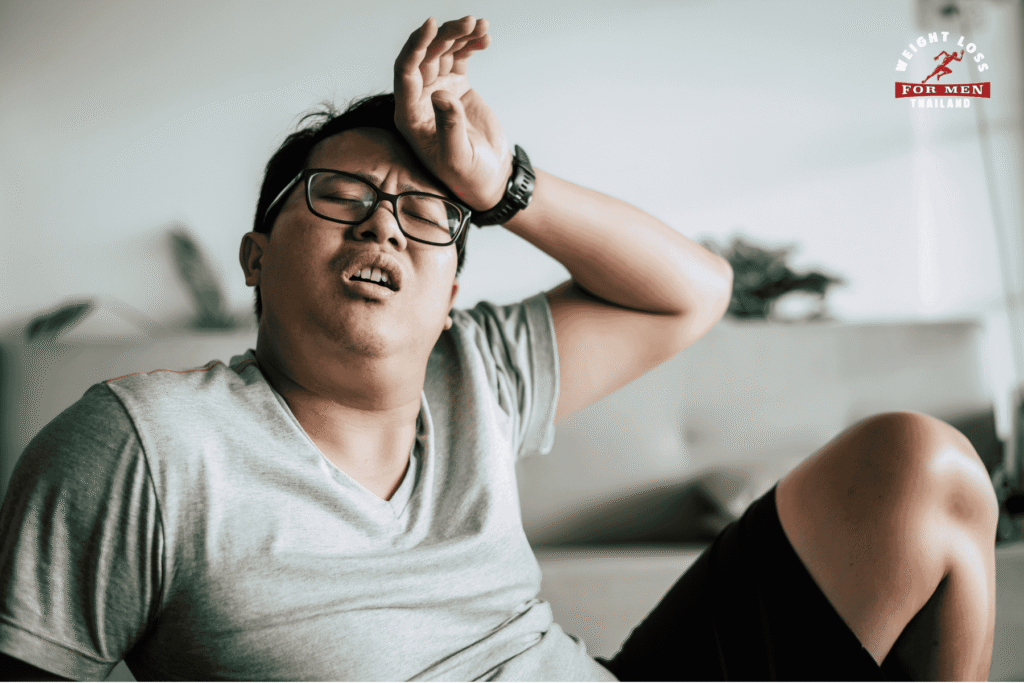
Not every man who struggles to lose weight after 40 has low testosterone, and this article is not a diagnosis. But there are recognized signs of low testosterone in men over 40 that are worth paying attention to, particularly when several show up together.
Physical signs
- Increased fat around the abdomen, even without a significant change in diet
- Noticeable loss of muscle mass or strength, even if you are still training
- Persistent fatigue that does not improve with more sleep
- Reduced stamina during workouts you used to handle easily
Signs beyond the physical
- Low motivation or a flat mood that feels different from your usual self
- Reduced interest in things you normally enjoy, including intimacy
- Difficulty concentrating or a general mental fog
Changes in libido or intimacy can have several causes, and obesity and erectile dysfunction often overlap with wider cardiovascular, metabolic, and lifestyle concerns.
If several of these sound familiar, particularly alongside stubborn weight gain, it is worth raising with your doctor. A simple blood test is the only way to confirm low testosterone. Guessing based on symptoms alone, or trying to self-treat, is not something we recommend or something this article is designed to encourage.
Why This Gets Worse After 40
Testosterone decline is gradual, but its effects compound with age in a way that catches a lot of men off guard. Muscle mass naturally decreases with age regardless of hormone levels, and lower testosterone accelerates that loss. At the same time, recovery from exercise takes longer, injuries happen more easily, and the all-out training approach that worked at 25 is often the wrong tool at 45. This is the exact stage where a lot of men either give up on structured fitness altogether or push too hard, get hurt, and give up anyway.
What Actually Helps, Beyond Supplements or Injections
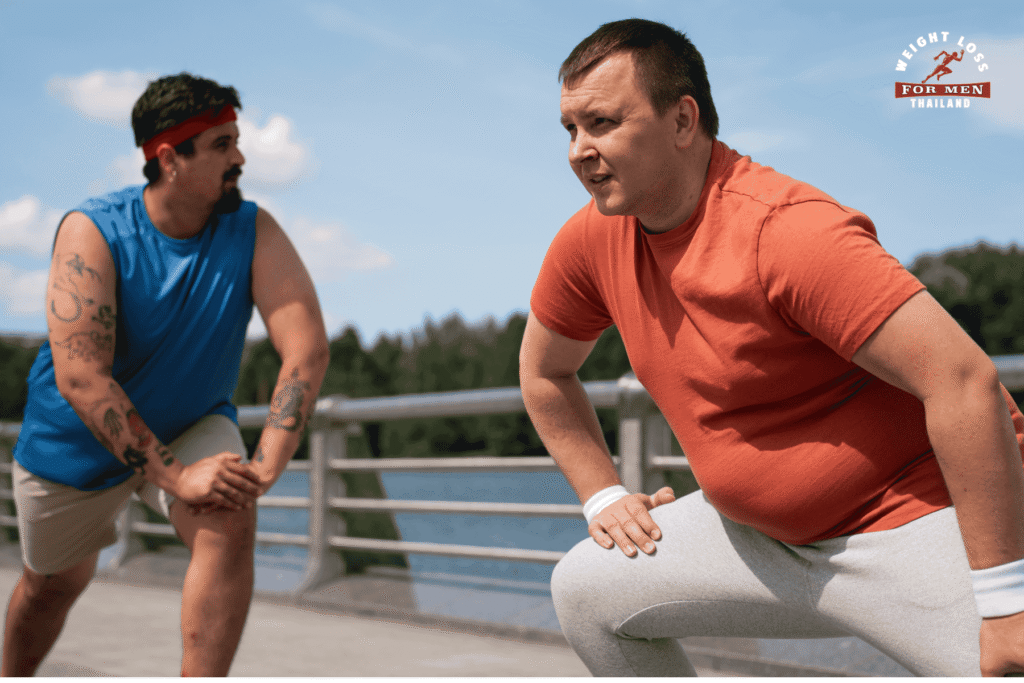
This is the part most articles skip, or worse, use to sell you something. Weight Loss For Men Thailand does not use testosterone replacement therapy, supplements, or any pharmaceutical shortcut. Our approach is built around the things that reliably move the needle for men in this situation, applied consistently, with proper guidance.
Strength training, done properly
Resistance training is one of the most effective forms of exercise for men trying to lose weight while preserving or rebuilding muscle. Strength training for weight loss improves physical capacity, supports long-term weight management, and gives men a practical way to build strength without relying on extreme workouts. This does not mean maxing out on heavy lifts from day one. It means progressive, well-structured resistance work at a pace your joints and recovery can handle.
Nutrition that supports your body, not punishes it
Crash diets and extreme calorie restriction can actually lower testosterone further. Our approach is built around real food, appropriate protein intake, and consistency, not deprivation. This is the “eat better, eat less, move more” principle we return to with every client, because it works without the crash.
Sleep and recovery
Testosterone production happens largely during sleep, and poor sleep is directly linked to lower levels. For a lot of men, fixing sleep is one of the fastest wins available, and it is something we build into every program.
Managing stress
Chronic stress raises cortisol, and elevated cortisol suppresses testosterone. Removing yourself from the daily pressures that keep stress levels high, even temporarily, gives your body a genuine chance to reset.
Conclusion
Low testosterone can be one factor behind stubborn weight gain, lower energy, reduced muscle mass, and changes around the waistline, but it is rarely the whole explanation. Sleep, activity levels, nutrition, stress, body weight, medication, and underlying health conditions can all affect the same picture.
If several symptoms of low testosterone are present, proper medical testing should come first. A weight loss program cannot diagnose or treat a hormonal condition, but it can support the habits that matter regardless of the result: regular movement, progressive strength training, better nutrition, adequate recovery, and a routine that can be sustained outside the program.
For men who have spent years trying to make those changes alone, a structured environment can make the process more manageable. Weight Loss For Men Thailand combines personalised nutrition, guided exercise, and accountability in Chiang Mai, while online weight loss coaching offers the same focus for men who need to work around existing commitments.
Results vary based on individual circumstances. This article is for informational purposes and is not a substitute for professional medical advice. Always consult your doctor before starting any weight loss program, particularly if you suspect a hormonal or underlying health condition.
FAQs
Does weight gain alone mean I have low testosterone?
No. Weight gain can be affected by many factors, including sleep, activity levels, diet, medication use, stress, and other health conditions. Low testosterone is only one possible factor.
How is low testosterone confirmed?
Symptoms alone cannot confirm low testosterone. A qualified clinician can assess your health history and arrange blood testing, which may need to be repeated to confirm consistently low levels.
Can lifestyle changes replace medical care for low testosterone?
No. Exercise, nutrition, sleep, and stress management can support overall health and weight management, but they do not replace medical assessment or treatment when a hormonal condition is present.